
Synthetic topical lipopeptide; cosmetic signal peptide / matrikine ingredient
Matrixyl
Also known as Palmitoyl pentapeptide-4, Pal-KTTKS, Palmitoyl pentapeptide-3, Palmitoyl-Lys-Thr-Thr-Lys-Ser
Cosmetic skincare ingredient, not an FDA-approved drug; lawful positioning depends on cosmetic appearance claims rather than drug claims such as collagen production or wrinkle removal.
- Skin
- Compounded · clean
- topical
- 2000
What it is
Matrixyl is the trade name most commonly associated with palmitoyl pentapeptide-4, a synthetic cosmetic peptide used in topical skin-care products. It should not be confused with Matrixyl 3000, which is a different peptide blend usually described as palmitoyl tripeptide-1 plus palmitoyl tetrapeptide-7. In ingredient lists, the relevant INCI name for the original Matrixyl molecule is generally palmitoyl pentapeptide-4[1 –2 ].
The biological rationale traces back to research on KTTKS, a five-amino-acid fragment derived from type I procollagen. Katayama and colleagues reported in 1993 that the KTTKS sequence was the minimum sequence needed to stimulate production of extracellular matrix components, including collagen and fibronectin, in cultured mesenchymal cells[8 ]. Cosmetic chemists later attached palmitic acid to KTTKS to create pal-KTTKS, with the goal of improving topical delivery through the lipid-rich stratum corneum[2 ,9 –10 ].
Mechanistically, Matrixyl is often described as a “signal peptide” or “matrikine.” That language means it is intended to mimic peptide fragments released during extracellular matrix turnover, thereby signaling fibroblast-related matrix activity in laboratory models[2 ,8 ,11 ]. In plain language, the claim is that the molecule resembles a fragment of collagen-processing biology and may influence skin-supporting matrix pathways. Human cosmetic outcomes, however, depend on topical formulation, skin delivery, concentration, and study quality, not mechanism alone.
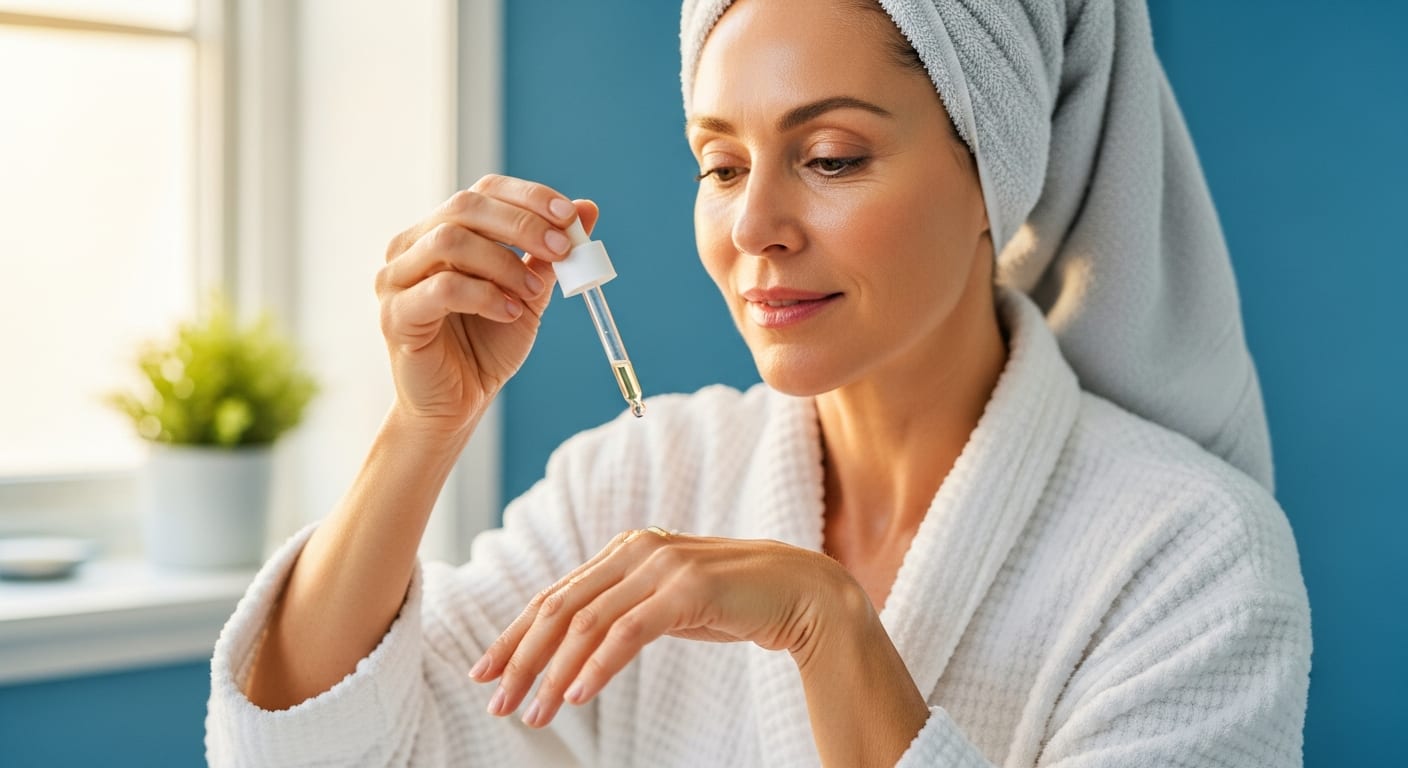
When used commercially, Matrixyl is applied topically in creams, serums, moisturizers, and eye products[2 ]. Published clinical evidence involves topical cosmetic formulations rather than injection, oral supplementation, or prescription use[9 ]. This section describes studied and marketed routes only; it is not an application or product recommendation.
Regulatory status
Matrixyl is not an FDA-approved prescription drug. In the United States, cosmetic products and ingredients, except most color additives, do not require FDA premarket approval before sale[3 ]. Cosmetic companies are responsible for ensuring products are safe under labeled or customary conditions of use and are not adulterated or misbranded[3 ].
Cosmetic vs. drug — the claim line
The key regulatory issue is intended use. FDA defines cosmetics as products applied to the body for cleansing, beautifying, promoting attractiveness, or altering appearance[3 –4 ]. FDA states that products intended to treat or prevent disease or to affect the structure or function of the body, including the skin, are drugs even if they also affect appearance[4 –5 ]. FDA’s anti-aging page gives a relevant example: making wrinkles less noticeable by moisturizing is a cosmetic claim, while removing wrinkles or increasing the skin’s collagen production can move a product into drug or device territory[5 ].
For Matrixyl-containing products, this means language matters. Claims such as “improves the appearance of fine lines” or “helps skin look smoother” are more consistent with cosmetic positioning. Claims that a product “rebuilds collagen,” “repairs damaged tissue,” “treats skin aging,” or “removes wrinkles” may raise drug-claim concerns depending on context[4 –6 ]. FDA also notes that cosmetic labeling must be truthful and not misleading, and that the FTC regulates advertising claims[6 ].
Compounding and controlled-substance status
Compounding status is not the usual pathway for Matrixyl. This draft did not identify an FDA-approved palmitoyl pentapeptide-4 prescription drug product or a specific 503A/503B compounding pathway for therapeutic use. Injectable or prescription-compounded Matrixyl should therefore be treated as outside the cosmetic evidence base and should receive legal and medical review before any public listing.
Matrixyl is not listed in federal controlled-substance schedules under 21 CFR Part 1308[7 ]. Internationally, the CIR final safety assessment states that the named pentapeptide-4 ingredients are not restricted under European Union cosmetic rules, but product-specific compliance varies by jurisdiction[2 ]. Date of last regulatory update verification: May 6, 2026.
Research summary
The research base for Matrixyl is modest but more concrete than for many cosmetic peptides. It includes one central split-face human study, several in vitro or ex vivo delivery and mechanism studies, and a cosmetic safety assessment. It does not include large independent randomized trials, prescription-drug trials, disease-treatment trials, or long-term clinical outcomes.
Mechanism foundation: Katayama 1993
The foundational mechanism paper is Katayama et al. 1993. The authors dissected a type I procollagen propeptide fragment and identified Lys-Thr-Thr-Lys-Ser, or KTTKS, as the minimum sequence that promoted extracellular matrix production in cultured mesenchymal cells[8 ]. This was not a cosmetic trial, but it provided a plausible basis for later topical cosmetic development.
Lintner and Peschard’s 2000 paper described the broader movement from biologically active peptides to functional skin-care ingredients, including the idea that chemical modification with long-chain fatty acids can make peptide sequences more feasible for topical cosmetics[10 ]. This paper is important historically, but it came from the cosmetic-ingredient development context and should not be treated as independent clinical proof.
Split-face human trial: Robinson 2005
The key human clinical study is Robinson et al. 2005. In that 12-week, double-blind, placebo-controlled, split-face, left-right randomized study, 93 Caucasian women aged 35-55 applied a moisturizer containing 3 ppm pal-KTTKS to one side of the face and the matching moisturizer vehicle to the other[9 ]. The study reported significant improvement versus placebo control in wrinkles and fine lines by quantitative technical analysis and expert-grader image analysis, and the ingredient was described as well tolerated[9 ]. Limitations include the narrow population, split-face cosmetic design, short duration, and the fact that the intervention was a finished moisturizer, not isolated peptide applied under all possible commercial conditions.
Skin penetration: Choi 2014
Skin delivery remains a central question. Choi and colleagues studied KTTKS and pal-KTTKS stability and permeation using hairless mouse skin in vitro[11 ]. Neither KTTKS nor pal-KTTKS was detected in the receptor solution under the study conditions, meaning neither crossed full-thickness skin into the receptor compartment. Pal-KTTKS, however, was detected in the stratum corneum, epidermis, and dermis, while unmodified KTTKS was not detected in any skin layer[11 ]. This supports the rationale for palmitoylation but also shows that delivery is limited and formulation-dependent.
Supporting in vitro studies
Additional in vitro studies support biological plausibility but not clinical certainty. Tsai and colleagues reported that KTTKS promoted type I collagen and TGF-beta-related expression in tendon cells, and Jones and colleagues reported collagen-stimulating effects of a C16-KTTKS peptide amphiphile on human fibroblasts[12 –13 ]. These are laboratory findings and should not be generalized into claims that consumer products rebuild dermal collagen in vivo.
CIR 2024 cosmetic safety assessment
The 2024 CIR final safety assessment reviewed palmitoyl pentapeptide-4 and related pentapeptide ingredients as cosmetic skin-conditioning agents[2 ]. According to 2023 VCRP data summarized by CIR, palmitoyl pentapeptide-4 was reported in 239 cosmetic formulations, including 223 leave-on products; the highest reported leave-on use concentration was 0.0012% in face and neck preparations and eye lotions[2 ]. CIR concluded the reviewed ingredients are safe in cosmetics under present practices of use and concentration, while noting insufficient data to evaluate airbrush delivery systems[2 ].
Overall, the evidence is strongest for a cosmetic claim that palmitoyl pentapeptide-4-containing moisturizers may improve the appearance of wrinkles and fine lines under studied conditions. Evidence is weaker for broader claims such as “collagen rebuilding,” “skin repair,” “anti-aging treatment,” or results comparable to prescription retinoids, lasers, injectables, or surgery.
Public discourse
Nicole Ruth, MD, board-certified dermatologist, described palmitoyl pentapeptide as a lipid-linked peptide used in cosmetic skin care and framed Matrixyl among better-supported topical peptides. This was consumer beauty commentary, not medical guidance[14 ].
It works by mimicking the skin's own repair signals
Whitney Hovenic, MD, dermatologist and surgeon, described Matrixyl as a peptide family that mimics collagen-repair signaling and positioned it as a gentler cosmetic option for people interested in anti-aging skin care[15 ].
small peptide fragments are released that signal the skin to initiate repair
Morgan Rabach, MD, board-certified dermatologist, discussed topical peptides broadly, emphasizing cosmetic routine use and lower photosensitivity concerns compared with some other actives. The article also discussed palmitoyl pentapeptide / Matrixyl 3000, though that terminology may mix the original Matrixyl molecule with later Matrixyl-branded blends[16 ].
They don't make your skin sensitive to other products or the sun
Public discourse reflects the views of the speakers cited and does not represent medical advice or the editorial position of ProPeptideGuide.
Side effects and safety
Published and reviewed cosmetic safety data suggest palmitoyl pentapeptide-4 is generally well tolerated in topical cosmetic use, but this conclusion applies to cosmetic concentrations and intact-skin use, not injection or medical treatment[2 ,9 ,11 ].
CIR safety assessment
CIR’s 2024 final assessment reviewed irritation, sensitization, genotoxicity, phototoxicity, and other safety data[2 ]. The panel summarized human patch and repeat-insult patch testing in which formulations containing palmitoyl pentapeptide-4 were not irritating or sensitizing under the tested conditions[2 ]. In Robinson’s 12-week clinical study, the moisturizer containing 3 ppm pal-KTTKS was reported as well tolerated[9 ].
Formulation matters more than the molecule
The main practical side effects are likely to come from finished formulations rather than the peptide alone. A product containing Matrixyl may also contain fragrance, preservatives, acids, retinoids, botanical extracts, sunscreens, or other ingredients that can irritate sensitive skin. Cosmetic tolerability data for one formulation should not be assumed to apply to every commercial product.
Theoretical concerns
Theoretical concerns include limited skin penetration, peptide degradation in skin, uncertain activity in disrupted skin barriers, and formulation instability[2 ,11 ]. CIR also noted that airbrush delivery systems could not be adequately assessed because of missing exposure data, which is relevant if peptide-containing cosmetics are aerosolized or sprayed[2 ].
Drug interactions and long-term use
Drug interactions are not established for topical cosmetic palmitoyl pentapeptide-4. There is no robust clinical literature evaluating use after laser resurfacing, chemical peels, microneedling, prescription tretinoin irritation, eczema flares, or active facial dermatitis. Long-term safety data are based mostly on cosmetic use experience and short cosmetic studies rather than multi-year controlled trials.
Available through
Matrixyl is available in the United States as an ingredient in nonprescription cosmetic skin-care products, not as an FDA-approved prescription peptide therapy.
No clinic, telehealth platform, injectable supplier, or research-chemical vendor is listed for Matrixyl as of 2026-05-06. Any future listing should be limited to compliant cosmetic products or retailers after review of ingredient identity, labeling claims, advertising claims, and safety substantiation.
ProPeptideGuide does not link to or endorse injectable Matrixyl, research-chemical Matrixyl, or products marketed with unapproved disease-treatment or drug-like wrinkle-removal claims.
Frequently asked questions
Is Matrixyl the same as palmitoyl pentapeptide-4?
Is Matrixyl FDA-approved?
Can Matrixyl legally claim to build collagen?
Does Matrixyl reduce wrinkles?
Does Matrixyl penetrate the skin?
Is Matrixyl better than retinol?
Is Matrixyl safe for sensitive skin?
Is Matrixyl a controlled substance?
References
- National Center for Biotechnology Information. PubChem Compound Summary for CID 9897237, Palmitoyl Pentapeptide-4 . Accessed 2026-05-06 . Source
- Cosmetic Ingredient Review Expert Panel. Safety Assessment of Myristoyl Pentapeptide-4, Palmitoyl Pentapeptide-4, and Pentapeptide-4 as Used in Cosmetics — Final Report . Released November 18, 2024 . Source
- U.S. Food and Drug Administration. FDA Authority Over Cosmetics: How Cosmetics Are Not FDA-Approved, but Are FDA-Regulated . Accessed 2026-05-06 . Source
- U.S. Food and Drug Administration. Is It a Cosmetic, a Drug, or Both? (Or Is It Soap?) . Accessed 2026-05-06 . Source
- U.S. Food and Drug Administration. Wrinkle Treatments and Other Anti-aging Products . Accessed 2026-05-06 . Source
- U.S. Food and Drug Administration. Cosmetics Labeling Claims . Accessed 2026-05-06 . Source
- 21 CFR Part 1308 — Schedules of Controlled Substances . Code of Federal Regulations . Accessed 2026-05-06 . Source
- Katayama K, Armendariz-Borunda J, Raghow R, Kang AH, Seyer JM. A pentapeptide from type I procollagen promotes extracellular matrix production . J Biol Chem . 1993;268(14):9941-9944 . doi:10.1016/S0021-9258(18)82153-6
- Robinson LR, Fitzgerald NC, Doughty DG, Dawes NC, Berge CA, Bissett DL. Topical palmitoyl pentapeptide provides improvement in photoaged human facial skin . Int J Cosmet Sci . 2005;27(3):155-160 . doi:10.1111/j.1467-2494.2005.00261.x PMID: 18492182
- Lintner K, Peschard O. Biologically active peptides: from a laboratory bench curiosity to a functional skin care product . Int J Cosmet Sci . 2000;22(3):207-218 . doi:10.1046/j.1467-2494.2000.00010.x PMID: 18503476
- Choi YL, Park EJ, Kim E, Na DH, Shin YH. Dermal stability and in vitro skin permeation of collagen pentapeptides (KTTKS and palmitoyl-KTTKS) . Biomol Ther (Seoul) . 2014;22(4):321-327 . doi:10.4062/biomolther.2014.053 PMID: 25143811
- Tsai WC, Hsu CC, Chung CY, Lin MS, Li MS, Pang JH. The pentapeptide KTTKS promoting the expressions of type I collagen and transforming growth factor-beta of tendon cells . J Orthop Res . 2007;25(12):1629-1634 . doi:10.1002/jor.20455
- Jones RR, Castelletto V, Connon CJ, Hamley IW. Collagen stimulating effect of peptide amphiphile C16-KTTKS on human fibroblasts . Mol Pharm . 2013;10(3):1063-1069 . doi:10.1021/mp300549d
- Balagam I. How the Best Peptides Skin Care Can Deliver Botox-Like Results . Vogue . November 21, 2025 . Source
- Real Simple. If Retinol Is Too Harsh, Try Matrixyl, Derms Say . March 2026 . Source
- Moon V. Read The Label: What You Need To Know About Peptides In Skincare . The AEDITION . Accessed 2026-05-06 . Source
International availability
Regulatory status differs by jurisdiction. Each entry below is sourced to the local regulator or pharmacopoeia and dated.
European Union (EU Cosmetics)
Approved drugPalmitoyl pentapeptide-4, Matrixyl 3000
Lawful as a cosmetic ingredient under EU Cosmetics Regulation 1223/2009 in topical anti-ageing products. Not authorized as a medicine.
EU CosIng — Cosmetic Ingredients DatabaseVerified May 7, 2026
United Kingdom
Approved drugLawful as a cosmetic ingredient under the UK Cosmetics Regulation.
Verified May 7, 2026
Australia (NICNAS / AICIS)
Approved drugPermitted as a cosmetic ingredient under the Australian Industrial Chemicals Introduction Scheme.
AICIS — Australian Industrial Chemicals Introduction SchemeVerified May 7, 2026
ProPeptideGuide does not facilitate cross-border importation or evade local prescription requirements. This section describes regulatory status for reference; obtaining a prescription medicine requires a lawful local prescription in the relevant jurisdiction.
Continue exploring
See full map →Same mechanism family · Skin
Same regulatory status · Legally compounded
Frequently researched together